
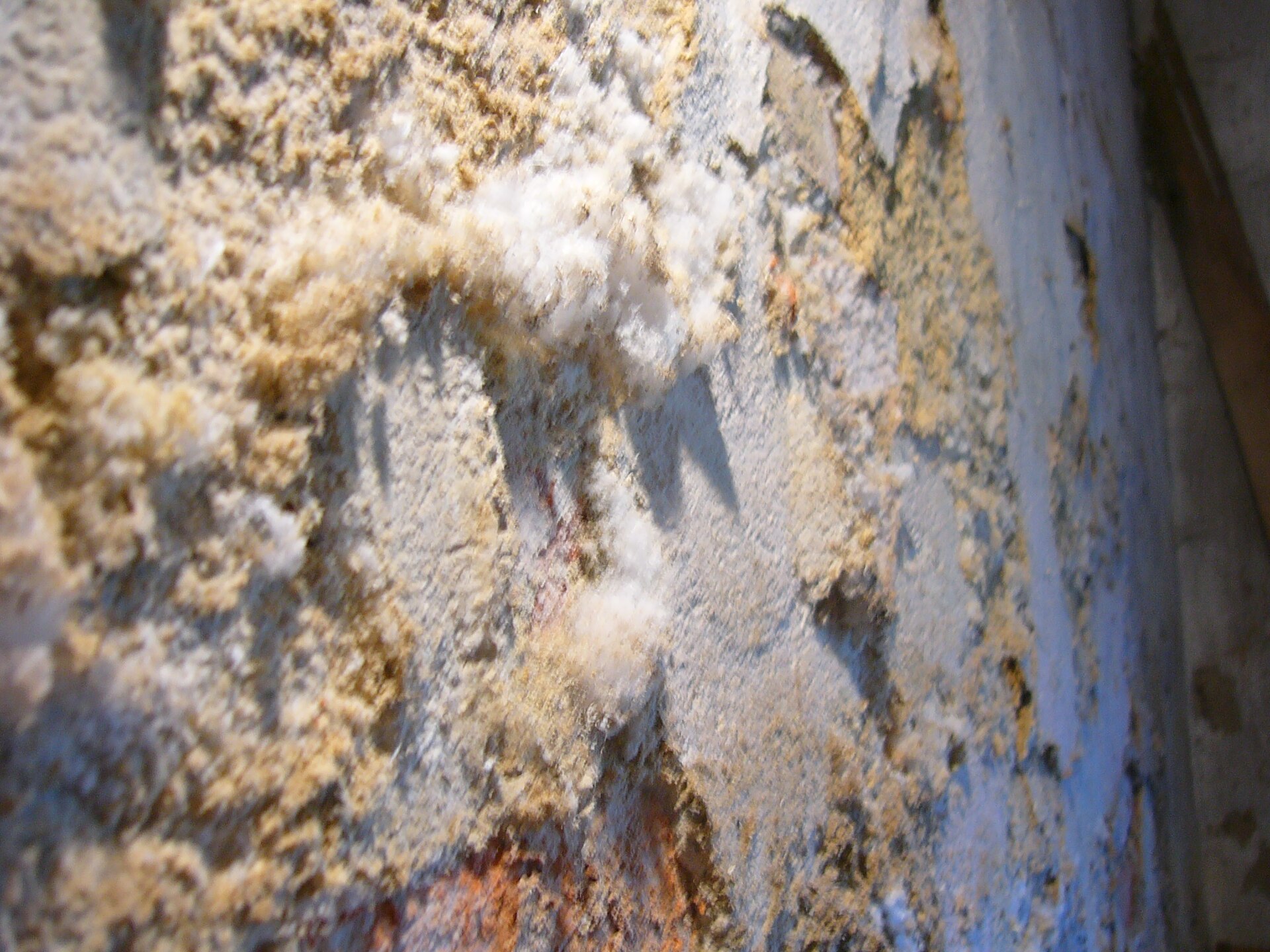
Efflorescence on Your Basement Wall: What That White Powder Means
That white powder on the wall is salt, and water put it there.
If you've found efflorescence on your basement wall, you've found that white powder or white chalky stain that shows up on old basement walls. It looks like someone brushed flour on the wall. It's salt, and water put it there. We're Dependable Concrete LLC, a family-owned concrete contractor in Philadelphia working in basements since 1984, and we see it all the time. Here's what it is, what it's telling you, and how to get rid of it for good.
Short answer: The white powder is salt that water carried out of the wall. When the water dries, the salt stays on the surface. You can brush it off, but it'll come back until the water stops getting into the wall.
Free estimate. Written price in 24 hours.
What Is the White Powder on Basement Walls?
Concrete, cement, brick, block and mortar all have natural salts in them. There are salts in the ground around your house too.
When water soaks into a basement wall, it picks up some of those salts. The water works its way through the wall toward the inside of the basement, where the air is drier. Once it reaches the surface, it dries out. The water leaves. The salt doesn't.
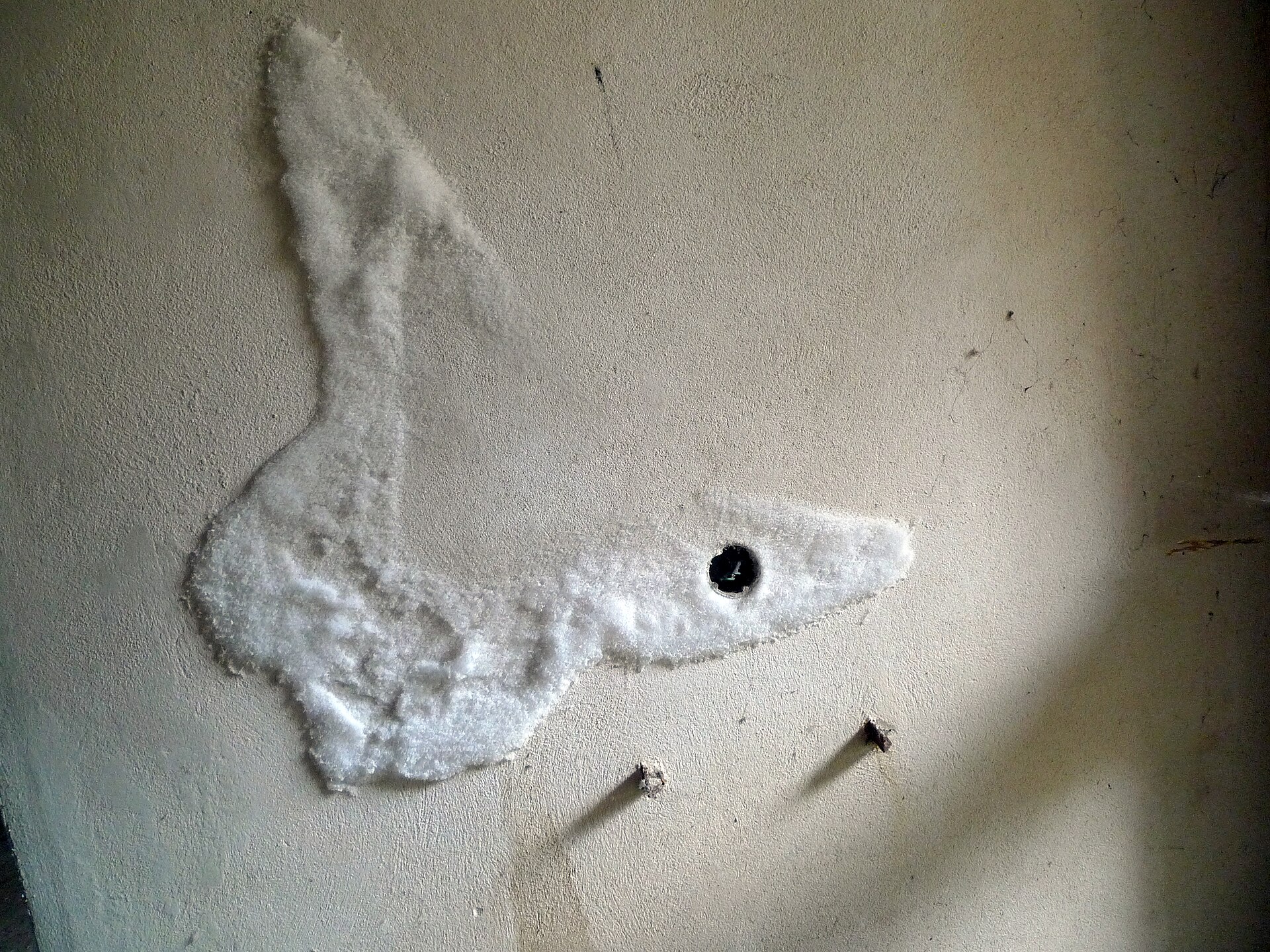
What's left is that white powder. Sometimes it's a light dusting. Sometimes it's a crusty, chalky layer, or fuzzy little white crystals.
What It Says About Moisture in Your Basement
The powder itself is mostly salt. It isn't the real problem. The water is.
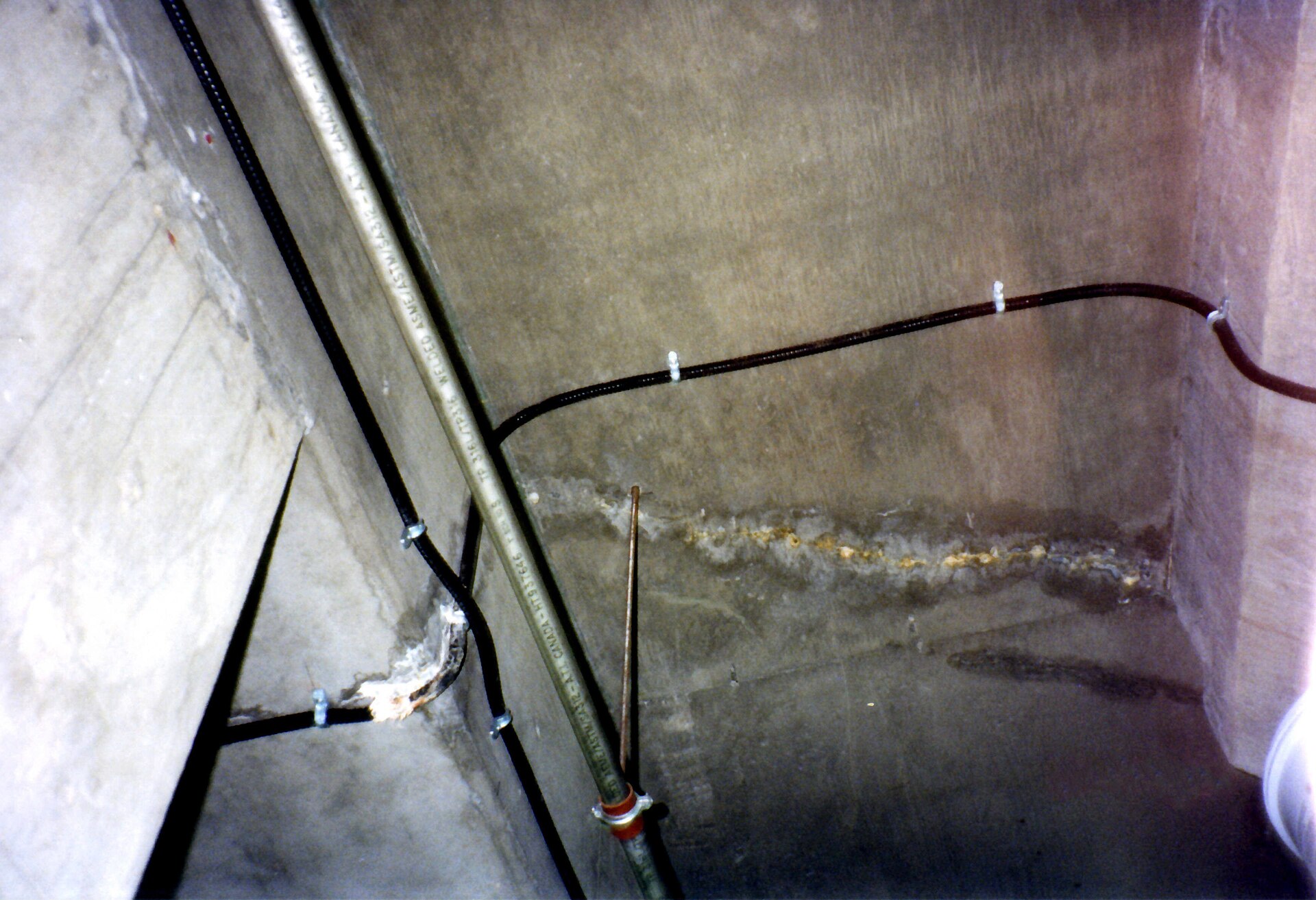
White powder means water is moving through that wall, and it's been happening for a while. In older Philadelphia homes, it often shows up:
- Low on the wall, close to the floor
- Under basement windows
- Along cracks
- On walls that face the street, the yard or a downspout
- On walls where the old cement coat is peeling or flaking
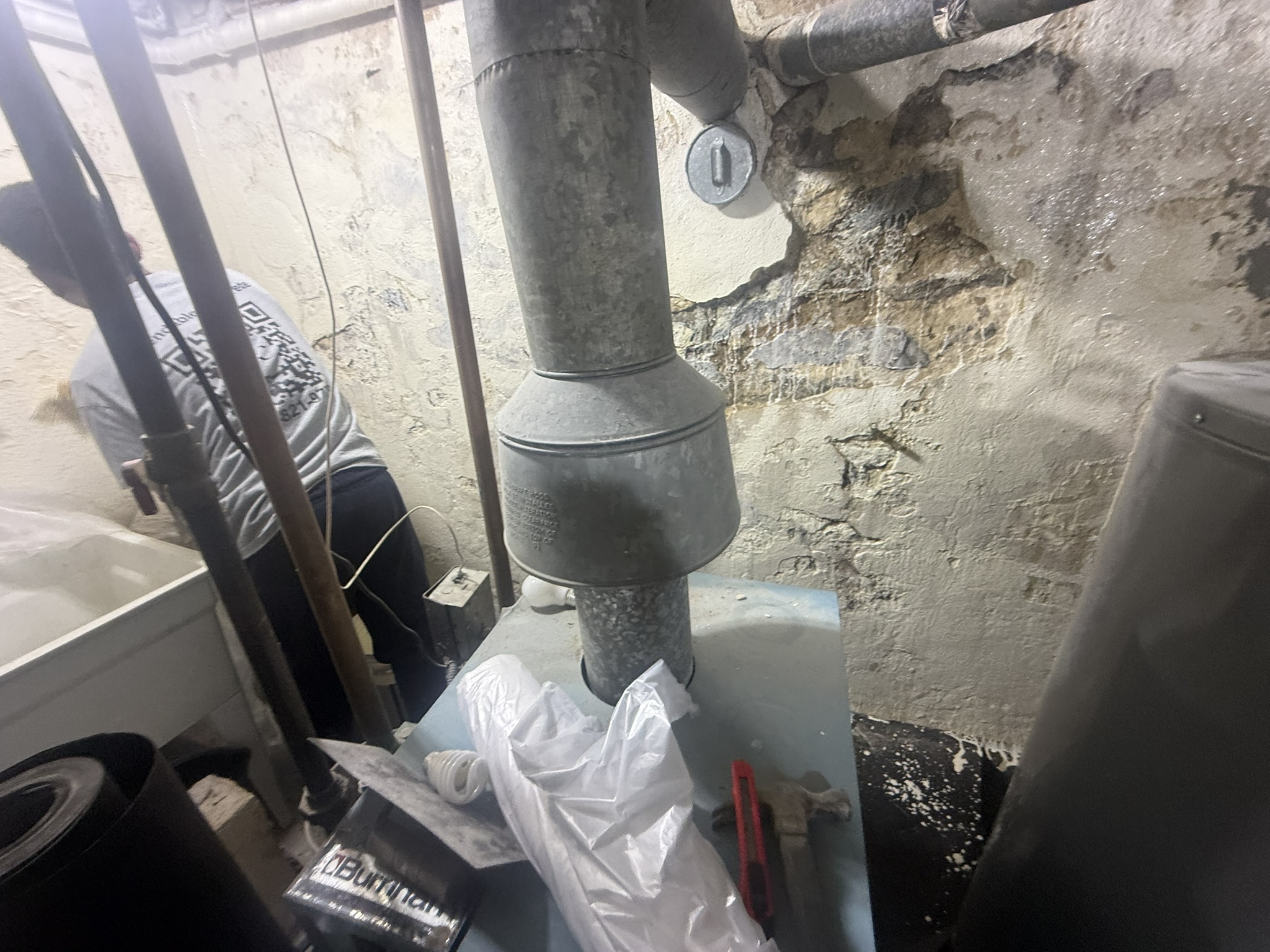
If you have white powder and the wall also feels damp, smells musty, or has paint and old coating peeling off, those are damp basement walls taking on water. Left alone, that water keeps working on the wall. Over time the face of the wall can get soft, crumbly and dusty, and the mortar between the bricks or blocks can start to fall out.
White Powder or Mold? How to Tell
People mix these up a lot. A quick way to check:
- Rub it. White powder crumbles into dust between your fingers. Mold tends to smear and is often fuzzy, green, gray or black.
- Spray it with a little water. The salt will soften or dissolve. Mold won't.
- Look at where it is. White powder grows on concrete, cement, brick and block. Mold likes wood, drywall, cardboard and anything else that can feed it.
You can have both in the same basement, because both come from moisture. If you're not sure, have someone look at it.
How to Get Rid of White Powder on Basement Walls and Keep It Away
Here's the order we'd go in. One thing first: cleaning alone won't keep it from coming back. If water is still getting into the wall, the powder will be back, sometimes within weeks.
1. Dry-brush it off first
Use a stiff brush, dry. No water. Wetting the wall can dissolve the salt and pull it back into the wall, where it shows up again later. Wear a dust mask, sweep the dust up and get it out of the basement.
2. Clean what's left with a cleaner made for brick and concrete
If a dry brush doesn't get it all, use a mild acid cleaner made for brick and concrete from the hardware store. Follow the label to the letter. Wear gloves and eye protection, try a small spot first, and rinse and dry the area like the directions say. Don't just grab the strongest stuff on the shelf. Too much acid can eat at old mortar and soft walls.
3. Find and stop the water
This is the step that actually solves it. Look outside first:
- Yard grading. If the ground slopes toward the house, rain runs right at your basement wall.
- Gutters. Clogged or overflowing gutters dump water along the foundation.
- Downspouts. Make sure they send water away from the house, not into the ground right next to the wall.
Those are outside the basement, and they're worth checking before anything else. Then look at the wall itself for cracks, gaps and soft spots where water is getting through.
4. Replace crumbling mortar between the bricks or blocks
If the mortar between the bricks or blocks is sandy, cracked or falling out, water walks right in. The loose mortar gets raked out and replaced with fresh mortar. We mix ours in-house, so we control what goes into the wall.
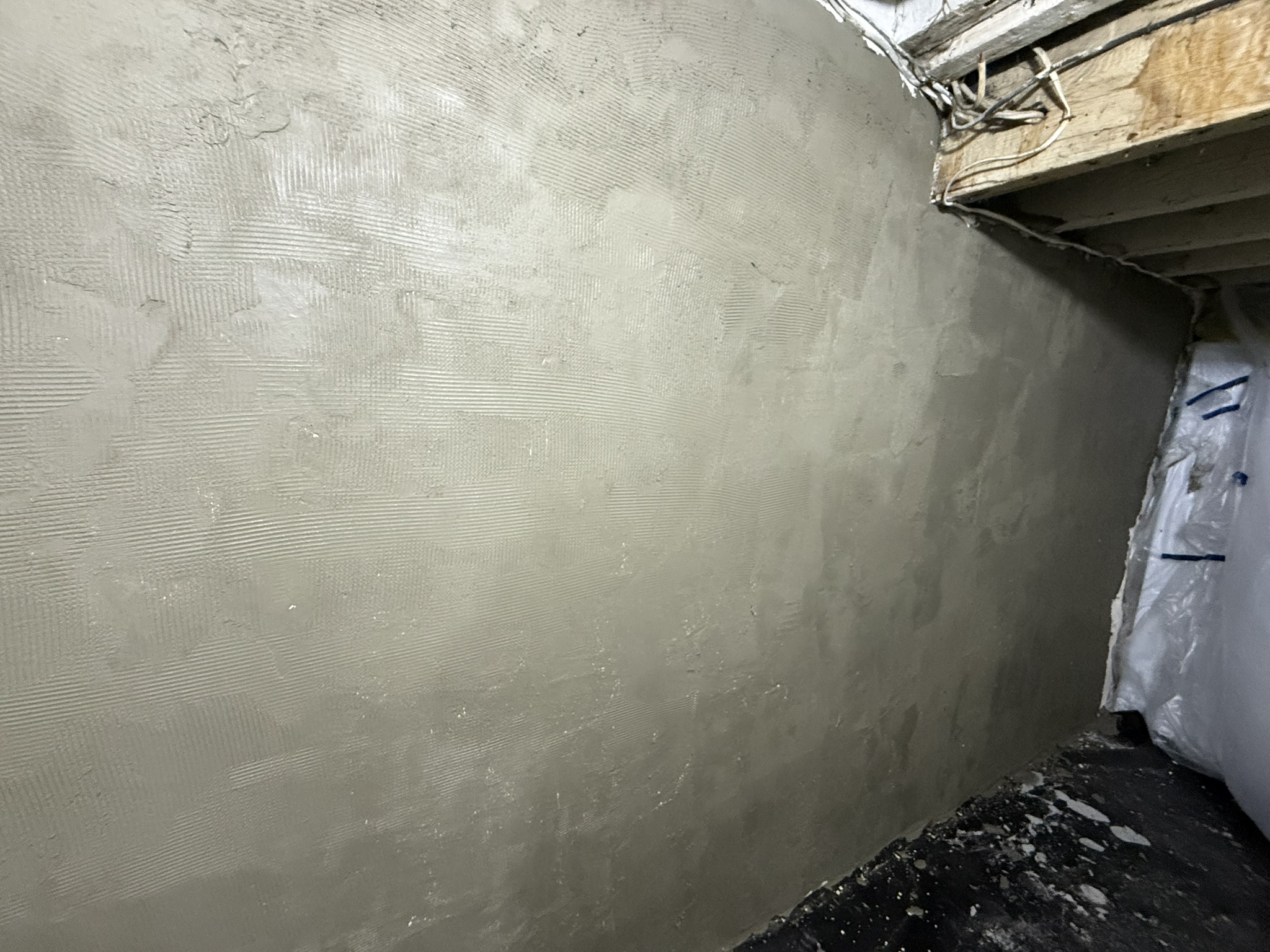
5. Parge the wall
Parging is a coat of cement troweled over the whole wall. On an old wall that's crumbling, flaking or peeling, it gives you a solid, smooth surface again and helps keep loose material and moisture in check. You can read how we do it on our basement wall parging page.
6. Seal the wall with a waterproof coating
Once the wall is solid and clean, a waterproof coating or sealer made for concrete and block walls goes on to slow water coming through from the inside. This is part of our basement waterproofing philadelphia work, and it pairs with basement wall repair in Philadelphia when the wall needs fixing first. Sealers stick best to a sound, clean wall, which is why the repair comes before the coating.
7. Run a dehumidifier
A dehumidifier pulls moisture out of the air. It won't stop water coming through the wall, but it helps the basement dry out and makes it less friendly to mold and musty smells.
When to Call Someone
Brush it off, watch the spot, and see what happens. Call a pro if:
- The white powder keeps coming back after you clean it
- The wall feels damp, or you see wet spots after rain
- The wall is crumbling, dusty or flaking
- Mortar is falling out from between the bricks or blocks
- You see cracks along with the powder
For more on why basements get damp this time of year, read our post on why basements get wet in winter.
Frequently Asked Questions
Is the white powder on my basement wall dangerous?
The powder itself is mostly salt. What matters is the water behind it. Damp walls can lead to musty air, mold on nearby wood or boxes, and walls that crumble over time.
Will the white powder go away by itself?
It might fade in a dry stretch, but it usually comes back after the next rain or when the snow melts. As long as water keeps moving through the wall, it keeps leaving salt behind.
Can I just paint over it?
Regular paint over white powder usually peels and flakes off, because the moisture and salt push it right off the wall. That's a big reason so many old basement walls are peeling. Stop the water and fix the wall first.
How do I keep white powder from coming back?
Stop the water. Check your yard grading, gutters and downspouts, replace crumbling mortar, parge the wall if it's crumbling or flaking, and seal it with a waterproof coating made for concrete and block. A dehumidifier helps keep the air dry.
Does Dependable Concrete fix basement walls with white powder?
Yes. We repair basement walls, parge them and seal them with waterproof coatings in homes across Philadelphia. Call 215-821-9779 for a free estimate.
Book Your Free Estimate
Seeing white powder, peeling or flaking on your basement walls? We'll come out, look at the walls, and tell you what's going on. You'll have a written price within 24 hours of the visit.
Call or text 215-821-9779.
Book your free estimate online
Book your free estimate, with a written price within 24 hours.
Ready for a Written Estimate?
Family-owned and serving Philadelphia since 1984.
Book Your Free Estimate Online
Ready to get started? Book your free estimate, with a written price within 24 hours. Our crew is courteous and professional from the first visit to the final cleanup. Tell us what you need, and we'll come out, take a look and walk you through the work in plain language.
Your written estimate within 24 hours of our visit. After we look at the job, you get a written, priced quote within 24 hours of the visit.
Book your free estimate or call 215-821-9779. We will return your call.
Rather talk? Call 215-821-9779